Financial Abuse and the Life changing Impact by Rosie Lyon
There is a lot more conversations being had around financial abuse and as the years go on, we continue to see more change in this area. Slowly, but surely. But do people truly understand the life changing impact it has on individuals that go through this?
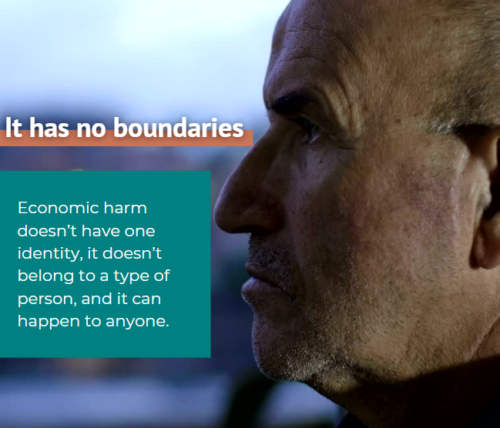
Financial abuse is a form of domestic abuse, where the abuser controls their partner’s money. The abuser does this to gain power and control over their partner which could involve the victim-survivor having no choice but to stay in the relationship. This can also be done to put the victim-survivor in debt or poverty, meaning that they cannot rebuild their lives if they leave.
Economic abuse is also a form of domestic abuse. It includes financial abuse plus controlling other financial resourcing, for example, housing. This type of abuse is now defined in the Domestic Abuse Act.
So how many people does this impact? Well we know that:
- 1 in 5 women and 1 in 7 men have experienced financial abuse. (FCA)
- 7 million people report experiencing economic abuse. (Refuge)
- 6 million people saw this begin as a result of the COVID-19 pandemic. (Refuge)
That is a lot of people that experience this type of abuse. There are lots of impacts of financial and economic abuse, but here are some of them:
- Occurs alongside another form of abuse including physical, sexual and psychological.
- Designed to create economic instability or make someone economically dependent.
- Limits freedom.
- Difficult to leave an abuser.
- Struggle to rebuild lives.
People generally ask how we can identify that financial and economic abuse is occurring. There are many different ways this abuse can happen but again, here are a few to think about:
- Take your salary so you have no money for yourself.
- Refuse access to joint bank accounts.
- Make you ask for money.
- Put debt in an individual’s name.
I myself know the impact it can truly have.
I did not realise I was experiencing financial abuse. When I was in my relationship for 7 years, we had a joint bank account. I was in charge of all the finances and he would just take money out as and when he pleased, this sometimes feeding into my wage. When I left him, he refused to sell, pay or leave our joint mortgage property. Due to this, I had no choice but to let it go into repossession. This took years to do, with a lack of support from the bank. Finally it’s completed but my credit scoring is so low, I cannot even get a phone contract in my own name.
I know many survivors that are struggling with financial abuse and the impacts they have. However, it is not spoken about as largely as other abuses.
As the years go on, we see small changes to help victim-survivors move on with their lives after financial abuse. This includes financial institutions writing off debt, educating someone on finances, helping victim-survivors back into employment and getting them the correct support they need. Banks have started to show big improvements in the UK, information can be found on your banks website to what they can do to support you. However, there is still a lot that needs to be done, so people like myself, can rebuild their lives.
If you are client facing and work in financial services or are an employer, we believe you should be able to SPOT AND SIGN POST and that’s what the Financial Abuse Specialist certification teaches you.
Written by
Rosie Lyon